Existing records carried forward
Faculty should not have to rebuild years of work. Existing FAR and HuskyDM information provides the starting point.
An i3 initiative
UConn's next faculty activity reporting system.
NEAR will replace Interfolio FAR with a system built around UConn’s existing data, connected systems, and the way faculty and departments actually do this work.
Replacing FAR. Built on UConn’s data. Shaped through discovery.
NEAR stands for New and Excellent Activity Reporting. Why not?!
01
UConn needs one reliable place for faculty activity information. Interfolio FAR asks a lot of faculty, and it still doesn’t fit many of the reporting and administrative needs across the University.
NEAR is being built to work better inside UConn’s own systems and cost less to maintain over time.
Interfolio FAR currently costs UConn about $185,000 a year. That cost is expected to approach $200,000 a year by 2028.
That’s part of the picture, not the main reason we’re doing this.
02
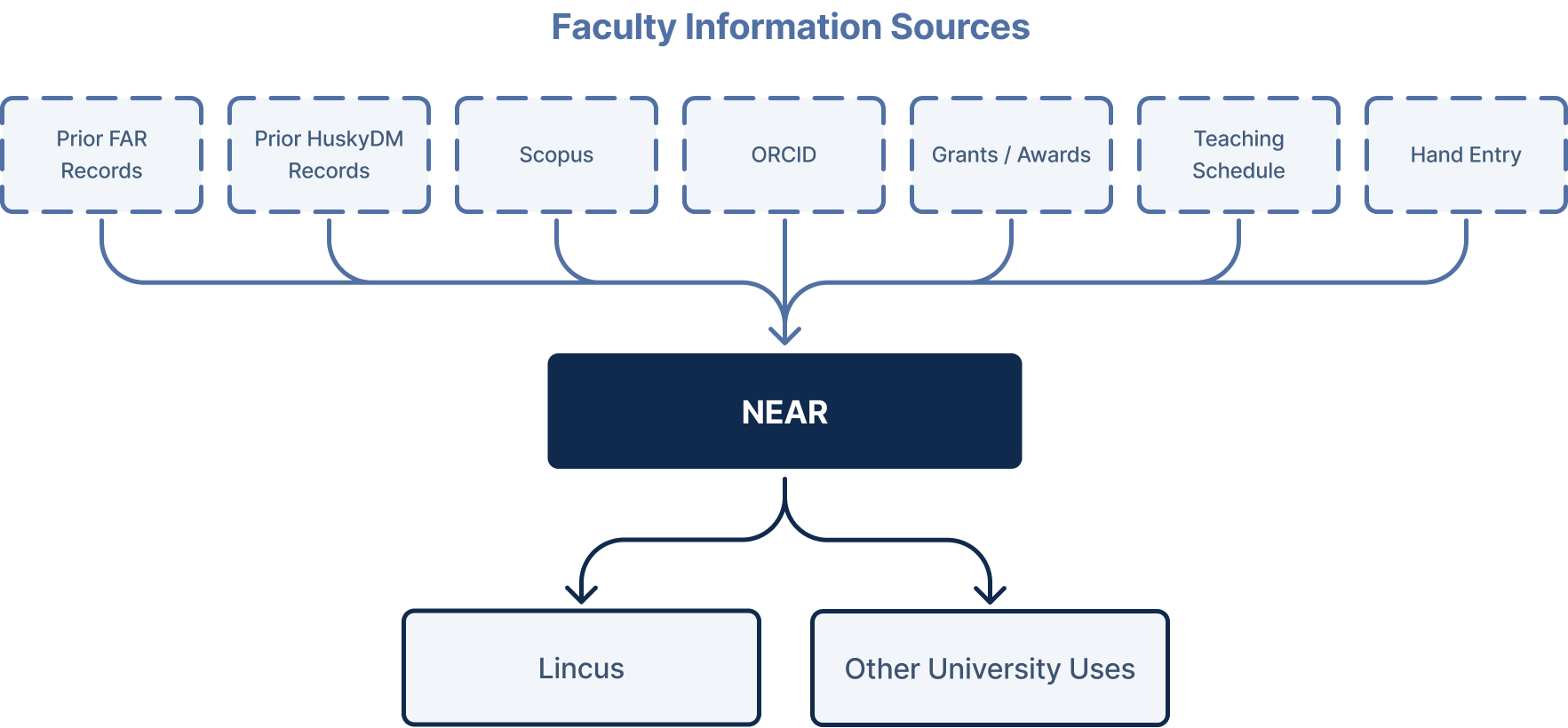
NEAR isn’t starting from zero. The work behind Lincus, UConn’s faculty expertise directory, already built real infrastructure for faculty information. NEAR builds on that infrastructure: prior FAR and HuskyDM records, Scopus, ORCID, grants and awards, teaching information, and what faculty enter directly.
If UConn already knows something, we should not ask faculty to enter it again.
Lincus and NEAR are related, but they’re not the same thing. Faculty will control what from their NEAR record, if anything, shows up on their public Lincus profile.
03
Early conversations and prototyping have already made several priorities clear. These are the capabilities and workflows we are actively shaping as the project moves forward.
Faculty should not have to rebuild years of work. Existing FAR and HuskyDM information provides the starting point.
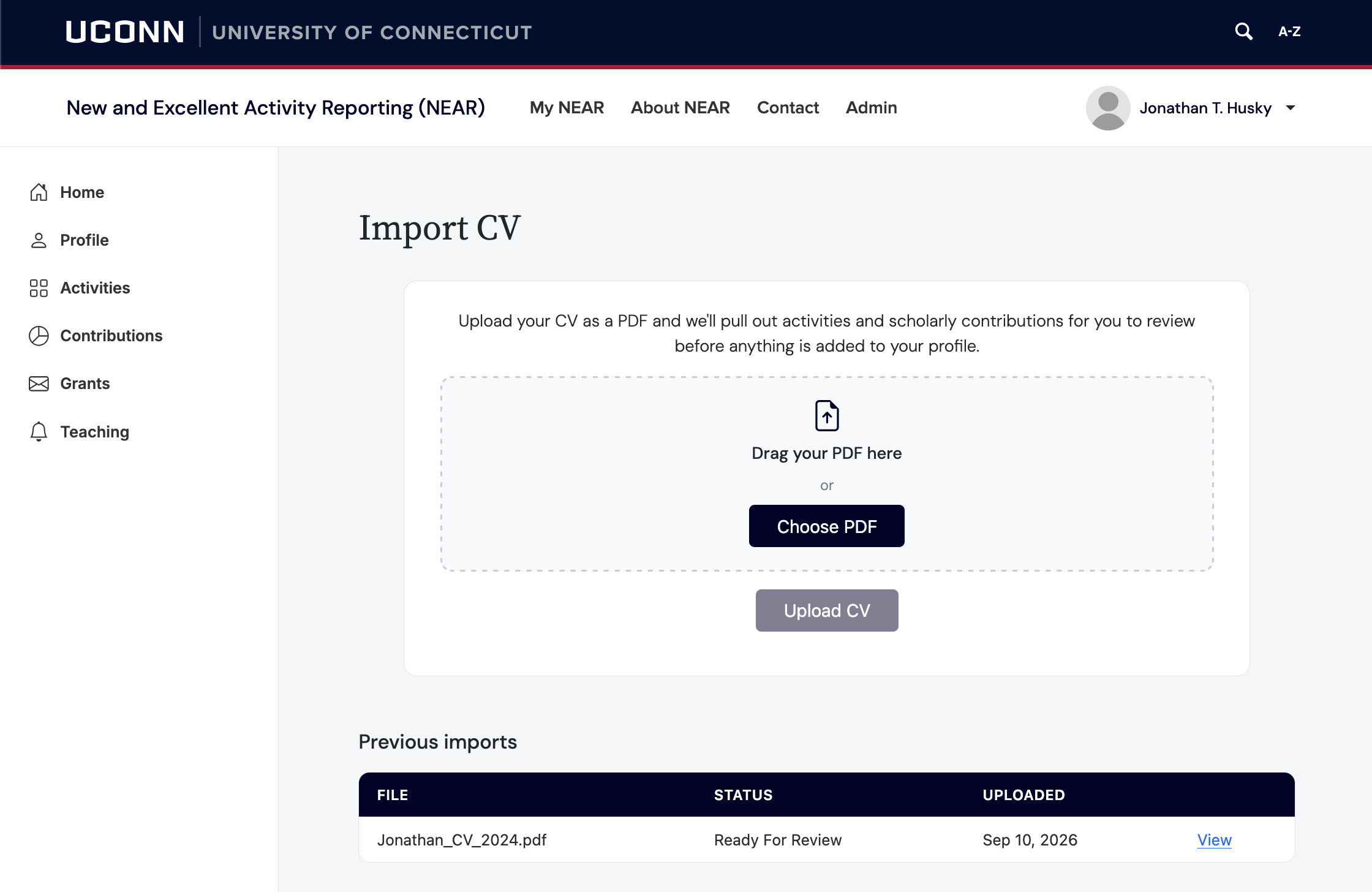
The AI CV Parser lets faculty upload a CV and review suggested activities instead of entering each item manually.
NEAR identifies publications and other records that already exist in external sources and brings them forward for review.
Teaching assignments already known to UConn appear automatically instead of being entered by hand each semester.
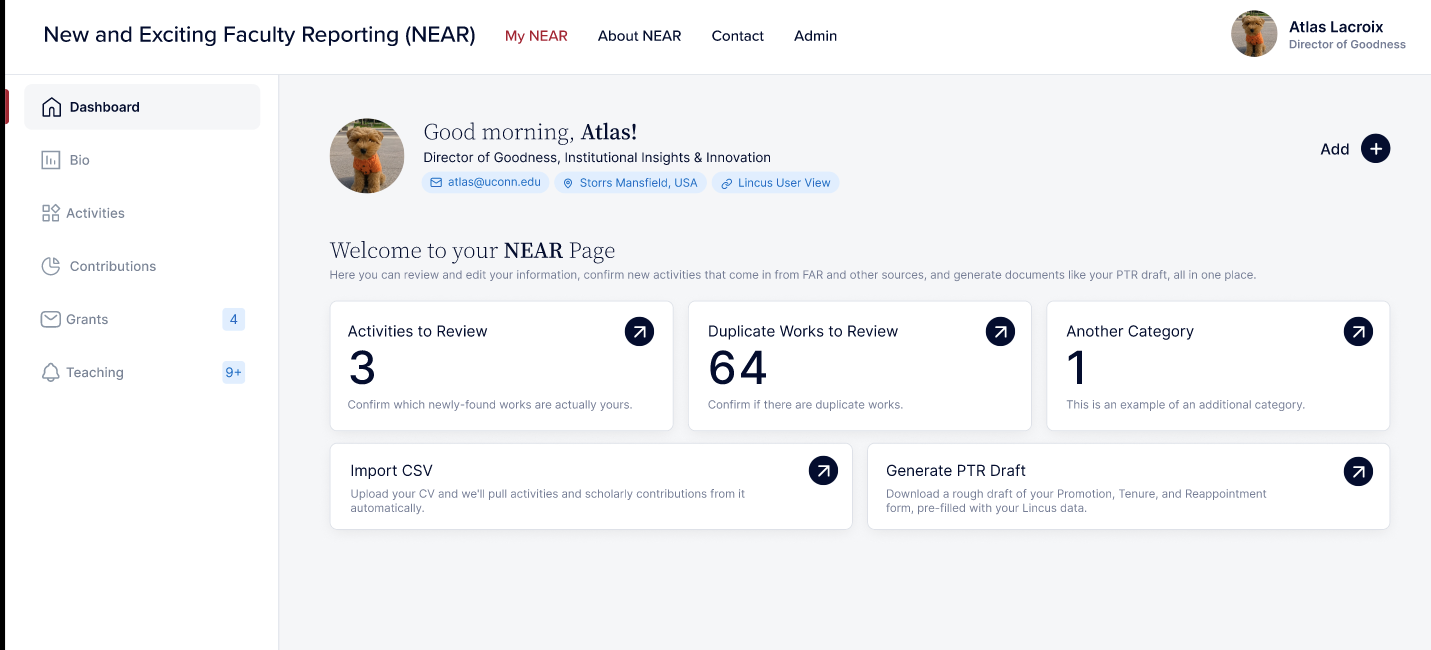
NEAR assembles an editable PTR form from information already in the system instead of making faculty rebuild it separately.
When NEAR finds or suggests information, the review step lets faculty quickly accept it, reject it, or make a correction.
Faculty control what information from their activity record appears on their public Lincus profile.
Departments, schools, and colleges can build reports around the information they actually need.
Units can collect additional information for local needs without forcing every faculty member at UConn into the same fields and workflows.
A closer look
These are the directions furthest along in prototyping. The images below are placeholders for the screens under development.
Upload a CV and review the activities NEAR pulls out of it before anything is added to your record.
A simple review step for anything NEAR suggests, so nothing reaches your record without your say.
A draft PTR form built from your activity record, ready to review and edit.
Choose what from your NEAR record, if anything, appears on your public Lincus profile.
04
We are working with the people who do this work: faculty who fill this out every year, and the staff and administrators who rely on what comes out of it.
Examples of what we’re asking
05
A snapshot of the work currently moving forward across discovery, data, and prototyping.
i3 is reaching out to schedule interviews with deans, department heads, faculty, and other partners to understand workflows, reporting needs, and pain points.
i3 is sourcing existing Interfolio FAR records now and will continue that work through October. The goal is to carry forward useful faculty activity history rather than starting from a blank system.
NEAR can now source teaching data, advising assignments, and grant data from existing university systems. The goal is to reduce unnecessary duplicate entry for faculty.
Faculty can upload a CV and review suggested activity records instead of entering everything manually.
NEAR validates records from external sources, including Scopus and ORCID, before presenting them for faculty review.
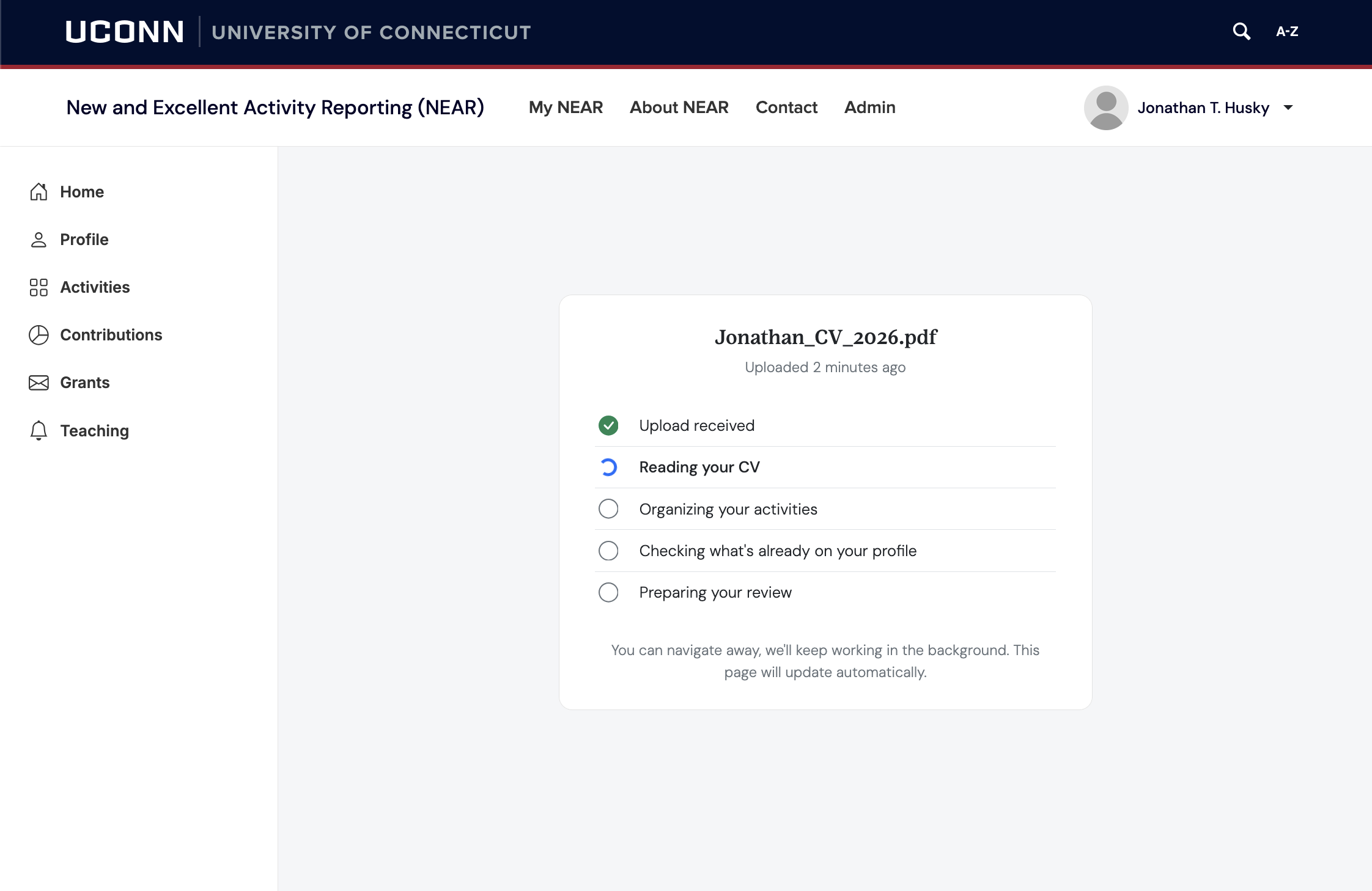
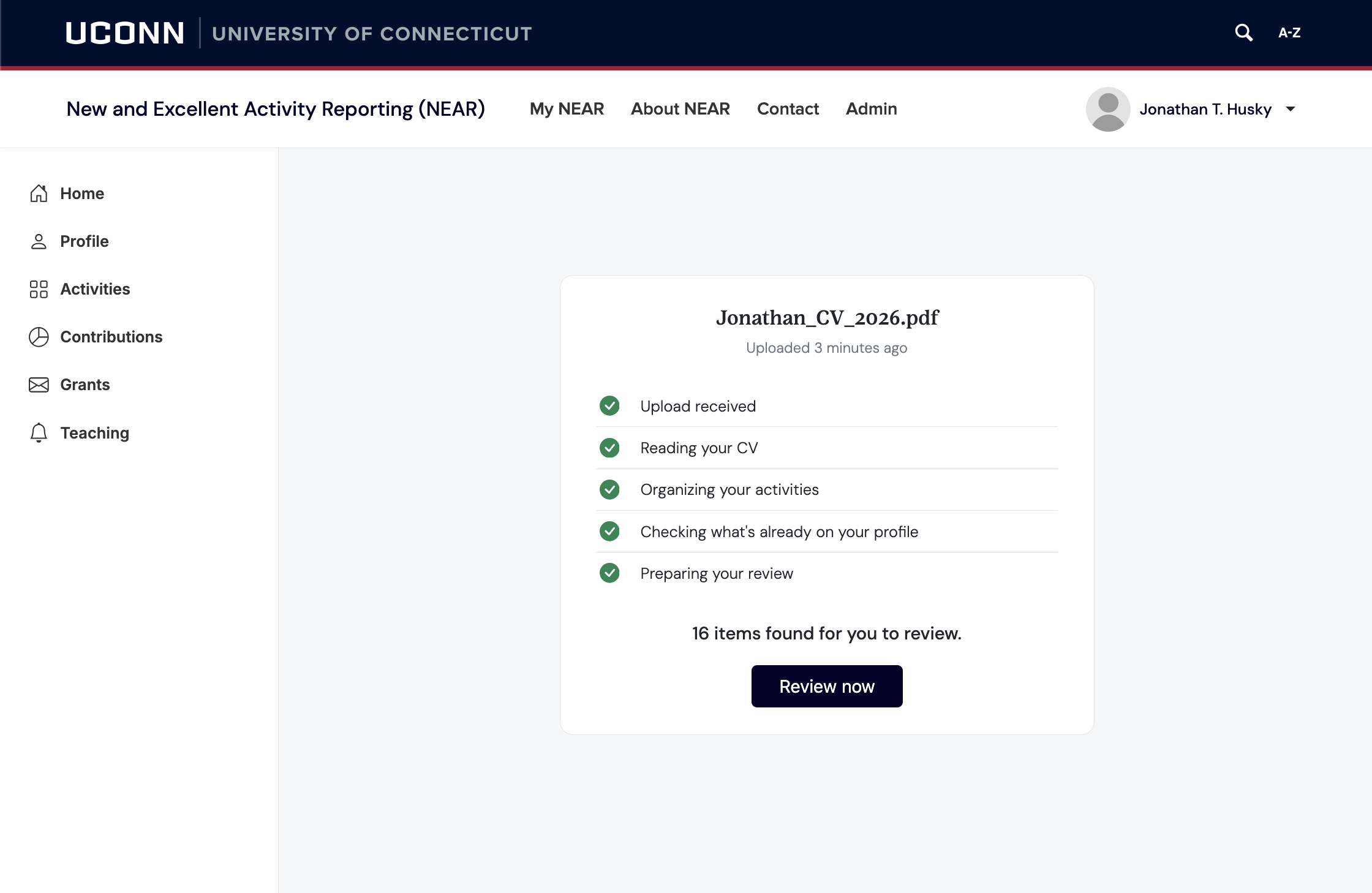
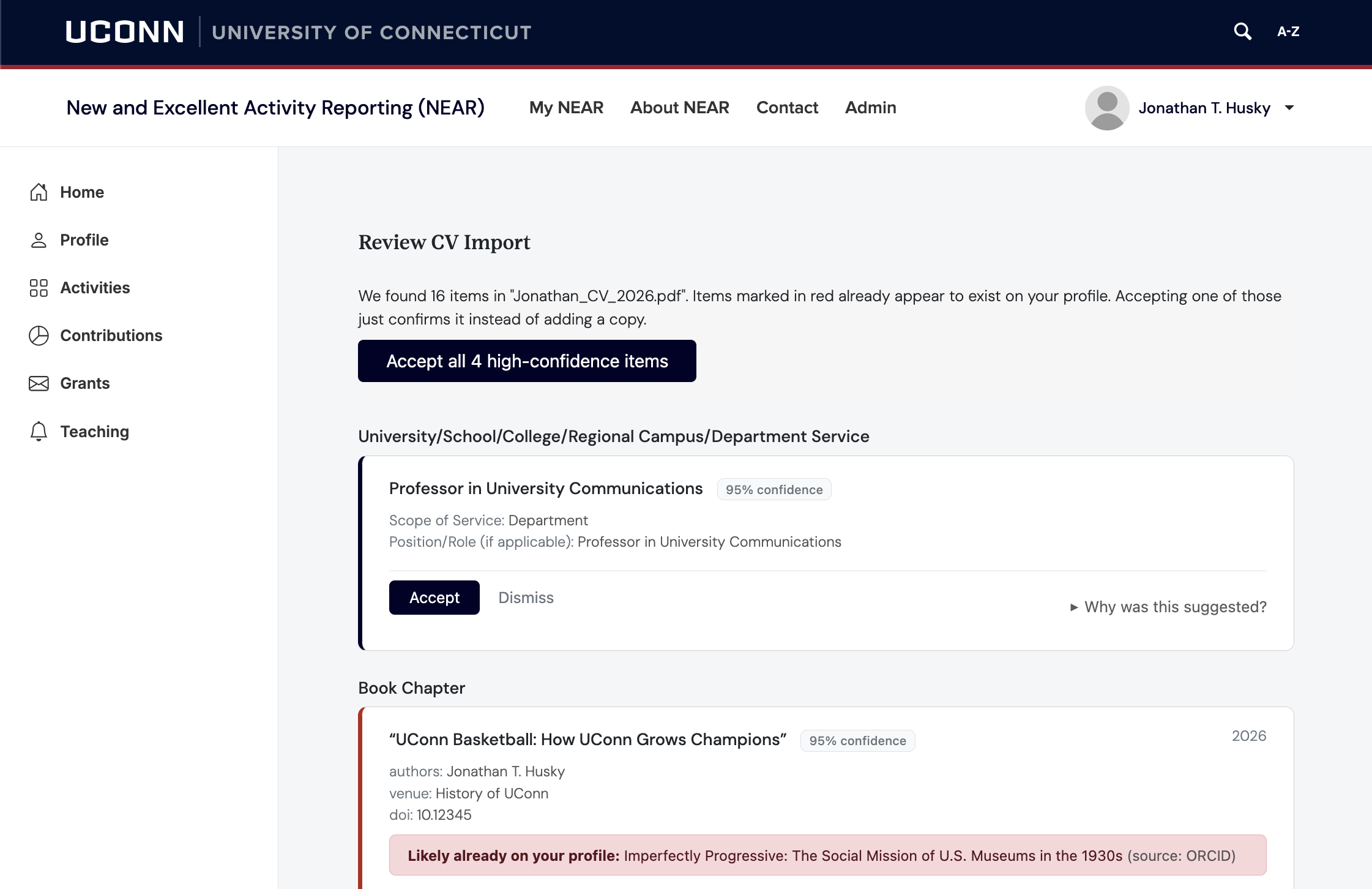
Allows faculty to upload a CV and review suggested records before accepting them into their NEAR profile.
06
If you maintain, review, or rely on faculty activity information, we want to hear from you. Tell us what works today, what does not, and where the current process creates extra work.
We are especially interested in real examples of workflows, forms, reports, spreadsheets, CVs, and other workarounds that NEAR should understand.