Lincus|
A Scholarly Research Aggregator
CASE STUDY PUBLISHED 03/20/2026Finding the right expert at a large research university can be harder than it should be. While faculty webpages provide basic information, they rarely capture the depth of a scholar's work or the connections that shape academic research. This is the story of how a student developer took a great idea and turned it into a powerful, reimagined new platform.
Reimagining research discovery at UConn with Lincus.
The concept behind Lincus originated with Dan Schwartz, now UConn's Vice Provost for Academic Operations, who developed the original platform with undergraduate students in his lab in 2013. The early version of Lincus gained significant traction at the University of Connecticut, reaching more than 4,000 student, faculty, and staff users. The platform was later spun out as a company and adopted by several Ivy League institutions on an annual contract basis. The company is no longer active, and the intellectual property has since returned to the UConn, where the platform has been redeveloped and is now maintained by the Institutional Insights & Innovation (i3) team.
Years later, recognizing the continued need for a modern research discovery platform, i3 relaunched Lincus as part of a broader effort to make faculty expertise across the University more visible, searchable, and up to date. As part of this initiative, i3 hired Maggie Danielewicz '26 (ENG), a senior computer science student, to serve as the project's lead developer and rebuild Lincus for long-term use by the UConn community.
At i3, we begin by putting something real in front of people. A rough draft, a working prototype, a first version you can click. From there we work closely with stakeholders to test ideas, gather feedback, and refine the system together. Because the work happens inside the University, we can respond quickly and shape the platform around the needs of the community rather than the constraints of a vendor product. The result is a solution that reflects how UConn actually works and evolves alongside it. Every project is different, but this approach helps us turn institutional challenges into tools that the University truly owns and can continue to improve over time.
Prior to its redevelopment, Lincus already existed as a research discovery tool, but it had significant limitations. For example, the website was difficult to navigate and users had little insight into a professor's full academic profile beyond basic directory-style information.
- Difficult to navigate the site
- Limited insight into professors' full research profiles
- Expertise across departments was hard to discover
- Fragmented access for students, faculty, and external users
- Redesigned Lincus for intuitive, user-friendly navigation
- Centralized and enriched research profiles with new data sources
- Scalable platform for discovering expertise across disciplines
- Supports students, faculty, and external users in exploring research
These shortcomings limited Lincus's usefulness for students, faculty, and external users alike. Without a reliable, centralized way to explore research expertise, the University lacked a scalable solution for surfacing the work happening across departments and disciplines. Recognizing this need, i3 identified Lincus as a high-impact opportunity to improve research visibility and knowledge discovery across UConn. They aimed to rebuild Lincus to match new development standards, take advantage of new data sources, and align it to University sustainability goals.

Under i3's leadership, the new version of Lincus was designed to be both technically sustainable and institutionally integrated. This approach aligns with i3's broader mission: building internal tools that reduce duplication, improve data quality, and make institutional knowledge more accessible. Lincus not only serves students and external audiences searching for experts—it also provides a clear incentive for faculty to keep their Interfolio records accurate, knowing that this information feeds directly into a public-facing platform.
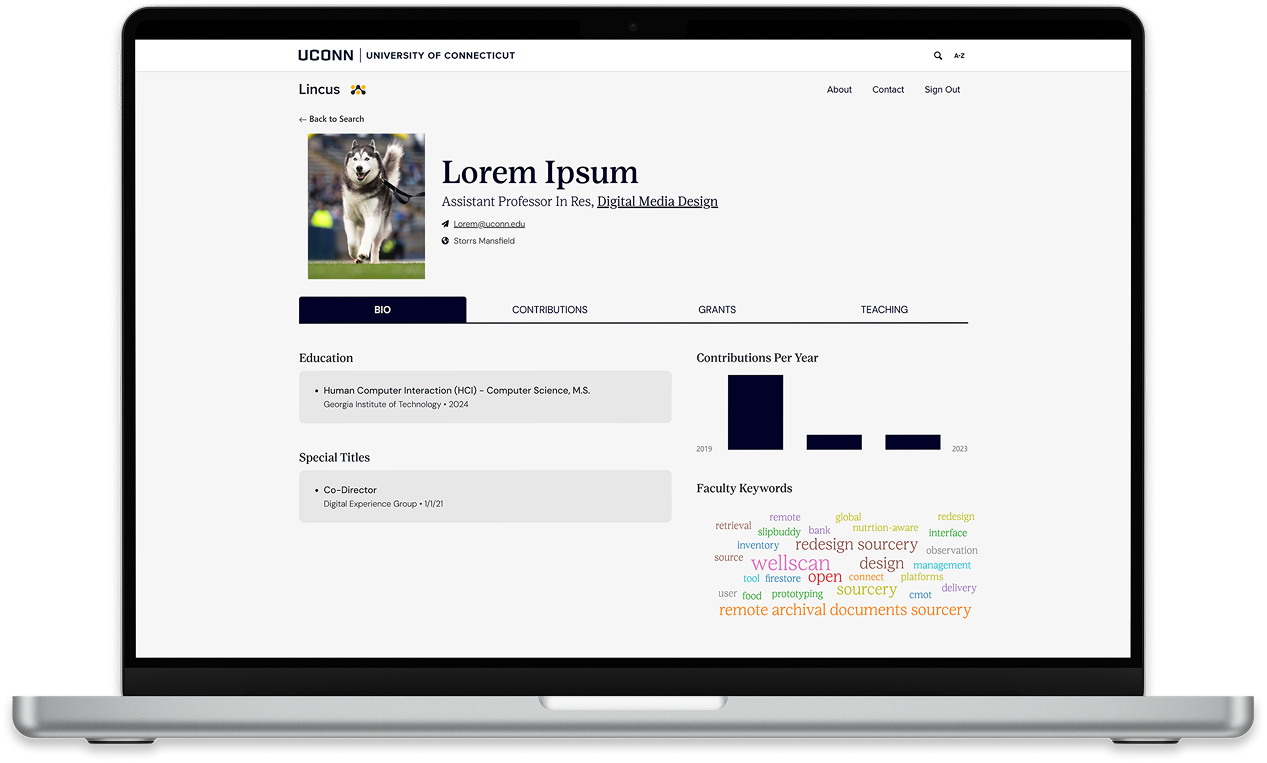
Primary source for faculty profiles. Manages academic and professional details, ensuring your core information is accurate and up to date.
Provides publications and co-author connections. Automatically enriches profiles with verified research outputs.
Allows adjustments and additions not captured elsewhere. Add Scopus IDs, correct details, and ensure your profile fully reflects your work.
As the sole developer on the project, Maggie worked closely within the i3 ecosystem to translate this vision into a functional system. Over the course of a year, she designed the database architecture, built complex data relationships, and managed the integration of more than 120,000 research contributions including publications, grants, and records.
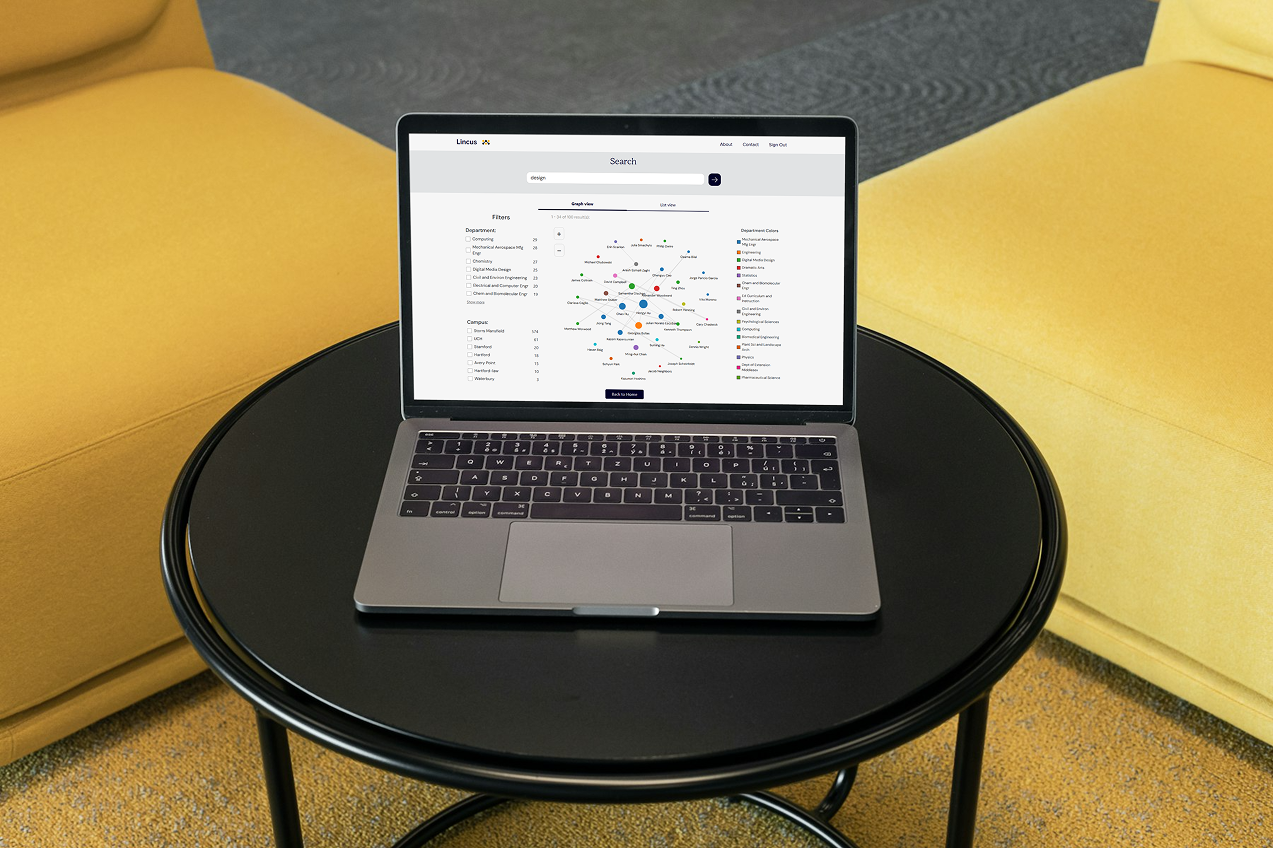
Lincus was built using the Laravel Framework, which has become a core part of i3's development approach. Laravel allows the team to move quickly from concept to working software while maintaining a clean, maintainable codebase. Its strong conventions and approachable learning curve make it well suited to a university environment where students and new developers can quickly contribute to real projects.
For i3, Laravel enables rapid development of internal tools that integrate institutional data and evolve
alongside the University's needs. Lincus demonstrates how modern open-source technology and focused
internal development can transform legacy systems into sustainable institutional infrastructure.
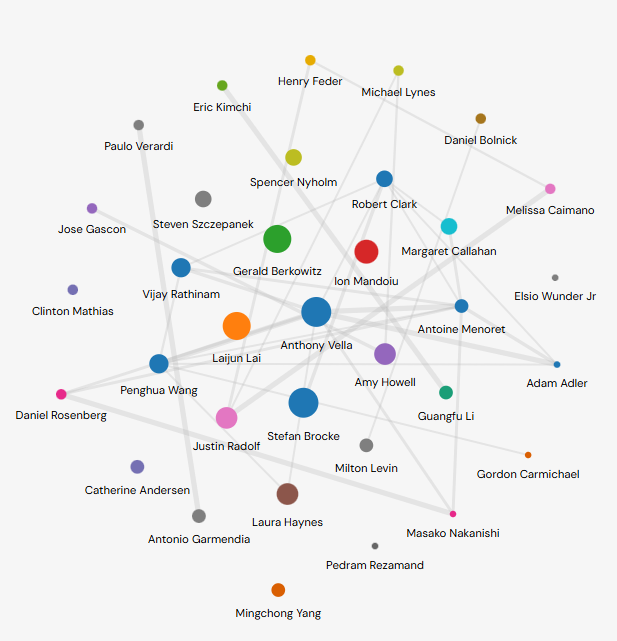
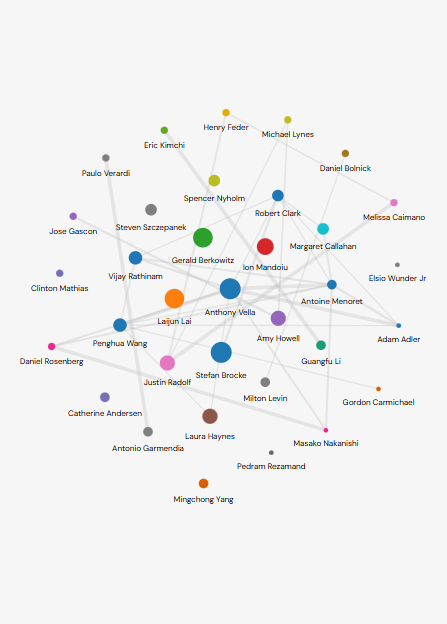
With its robust search engine and faculty profiles, it reveals the research ecosystem of the University.
Users can explore faculty collaboration networks, discover connections, and gain a fuller picture of
academic work that often remains invisible outside of publications or individual departments.
For i3, Lincus represents a scalable model for institutional tools:
systems that serve multiple audiences, rely on authoritative internal data, and evolve alongside the
University.
By investing in internal development talent and modern infrastructure, i3 is helping UConn better showcase
its
expertise both internally and to the broader public.
Lincus
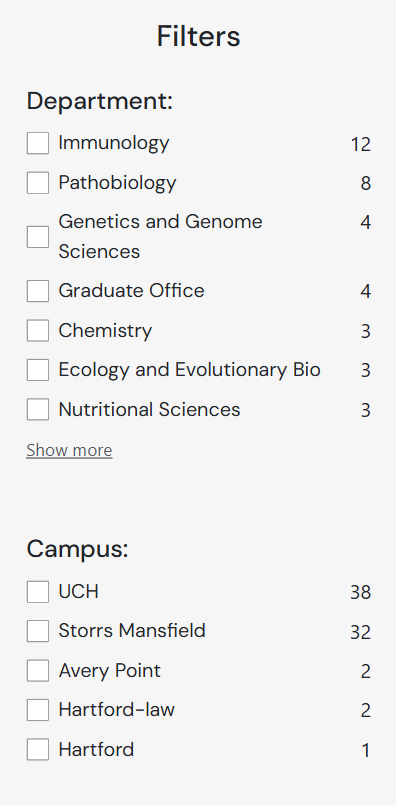
by department or campus to narrow your results
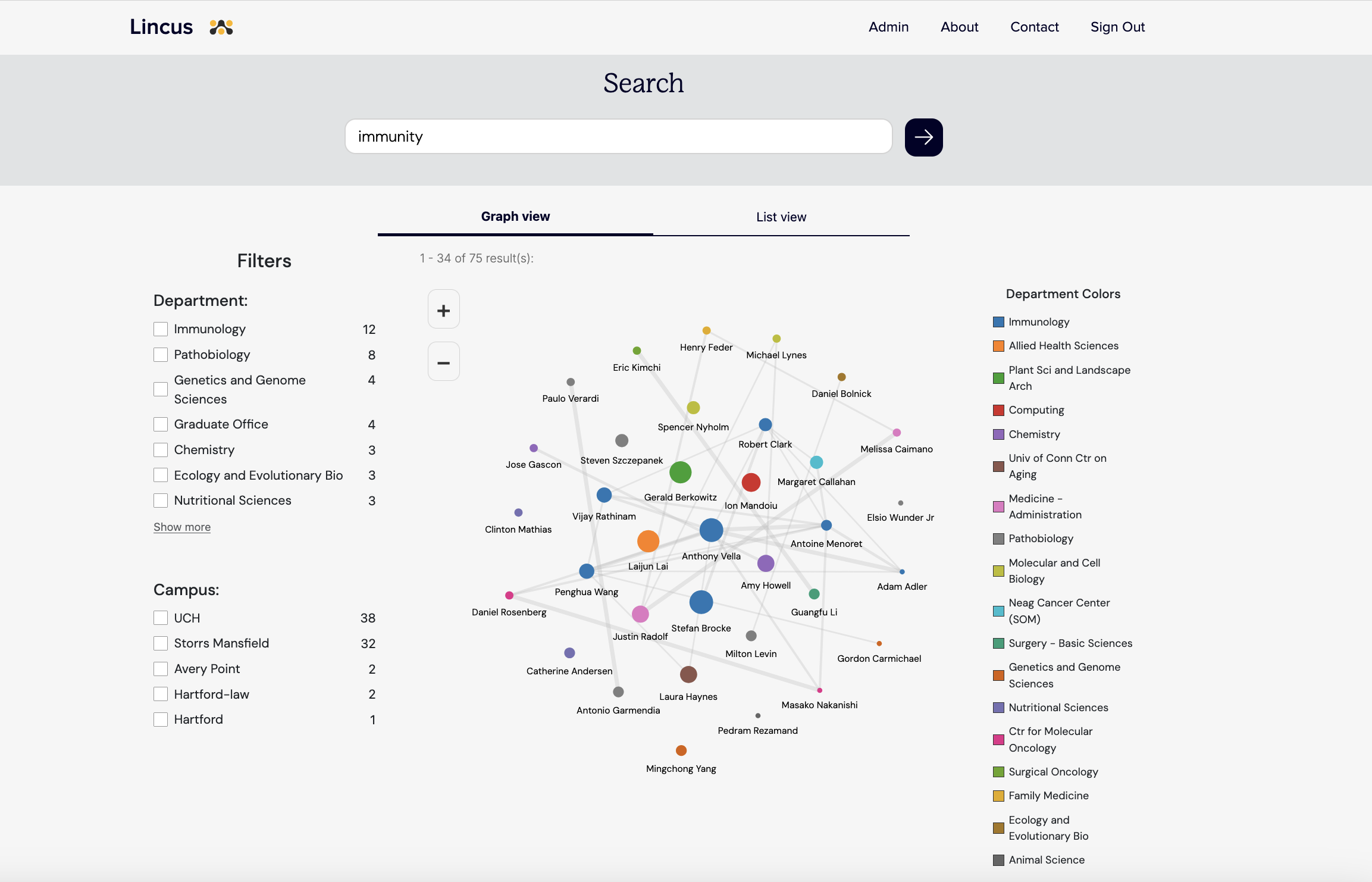
for name or keyword
by department or campus to narrow your results
with individuals based on their expertise
for name or keyword

with individuals based on their expertise
through a word cloud of related topics
A research discovery platform built to evolve.
The project demonstrates how thoughtful innovation, paired with strong technical execution, can transform
underused systems into essential institutional resources.
As Lincus continues to grow, it stands as a case study in how i3 supports the University by turning complex
data into accessible insight, strengthening connections across campus, and making UConn's research more
visible to everyone who needs it.
Maggie sees herself continuing in software development with a focus on building tools that improve how
people access information and interact with complex systems. While she entered computer science without a
fully defined career path, her work on Lincus through i3 helped clarify her interests in applied software
engineering, data-driven systems, and user-centered design.
Through leading the redevelopment of Lincus, Maggie discovered a strong motivation in making systems more
intuitive and impactful—often in ways users may not immediately notice. She particularly is interested in
work that modernizes legacy platforms, improves data usability, and translates institutional needs into
scalable solutions.
i3 gave me the tools to transform my knowledge from 4 years at UConn and give back to the school that taught me so much. As a student, that experience is incredibly rewarding and unique. Being able to use my computing skills to rebuild Lincus — something that will help both faculty expertise and student research grow — is an opportunity I will always value.
Maggie Danielewicz '26 (ENG), Lead developer on the Lincus project